
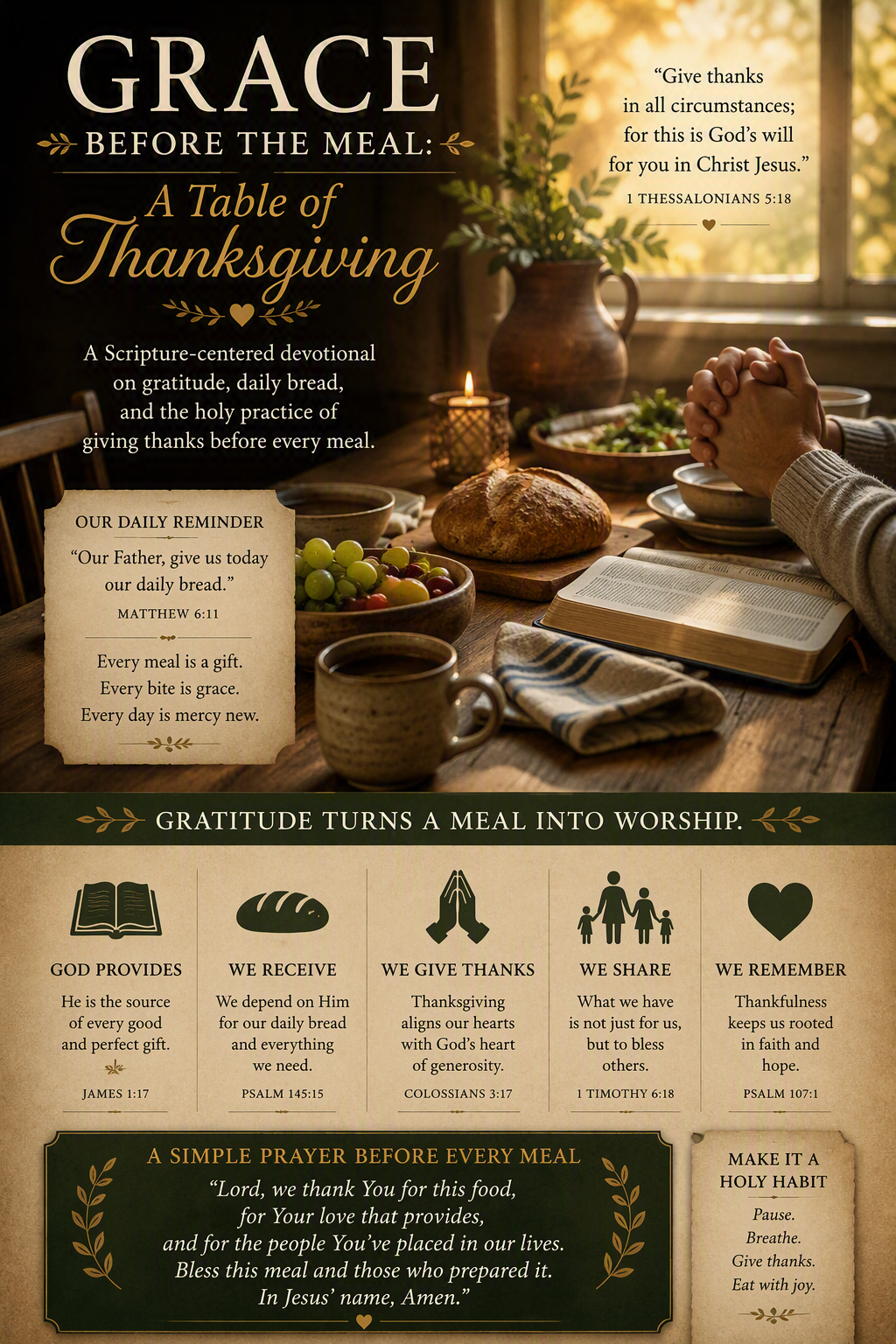
Grace Before the Meal: A Table of Thanksgiving
A Scripture-centered devotional on gratitude, daily bread, and the holy practice of giving thanks before every meal.
There are meals we remember because the table was full, and meals we remember because it was not. There are suppers prepared in abundance and quiet breakfasts made from what remained. Yet Scripture teaches us that neither the size of the table nor the variety upon it determines whether it is a place of blessing. The blessing begins when we receive what is before us as gift.
Before He fed the crowds, Jesus gave thanks. Before He broke bread with His disciples, Jesus gave thanks. In the ordinary act of lifting bread toward heaven, He showed us that gratitude is not an accessory to the meal. It is a way of seeing the Giver in the gift.
“And he took the seven loaves and the fish, and having given thanks he broke them and gave them to the disciples.” — Matthew 15:36
Thanksgiving begins with receiving
We often approach food as something we have earned, planned, purchased, prepared, or managed. All of those things may be true. Hands work, gardens are tended, recipes are learned, and tables are set with care. But beneath every human effort is a mercy we did not create: rain, soil, seed, breath, appetite, strength, and the people with whom we share the day.
Giving thanks before a meal is a small interruption to the illusion of self-sufficiency. It reminds us that we are receivers before we are providers. The bread in our hands is not merely fuel. It is evidence that God has sustained us again.
This does not require a perfect meal or a perfect heart. Gratitude is not pretending that life is easy. It is choosing to notice grace while life is still unfinished. A simple plate can become an altar of remembrance when we pause long enough to say, “Thank You.”
Daily bread is enough for today
When Jesus taught His disciples to pray, He gave them these words: “Give us this day our daily bread” (Matthew 6:11). The prayer is wonderfully modest. It does not ask us to control every tomorrow. It asks us to trust God for what is needed today.
Daily bread may be a loaf on the counter, a bowl of soup shared with a neighbor, or the strength to prepare a meal when the day has been long. It may be provision that arrives in a form we did not expect. The point is not that every table looks the same. The point is that God meets His people in the real conditions of their lives.
Gratitude grows when we stop measuring our portion against someone else’s and begin receiving it as today’s provision. What is enough for today may not look impressive from a distance, but it can still be holy. The wilderness manna was not a banquet. It was enough, and enough was a miracle.
A prayer changes the atmosphere of the table
A prayer before eating does more than bless the food. It blesses our attention. It gathers scattered people, hurried thoughts, and anxious hearts into one brief moment of shared dependence.
You do not need elaborate words. A sincere prayer can be as simple as this:
Lord, receive our thanks for this food, for the hands that prepared it, and for the people gathered here. Teach us to receive Your gifts with humility and to share them with generosity. Amen.
When gratitude is spoken aloud, the table becomes a place where children learn that food is not disposable, guests learn they are welcome, and weary people remember they are cared for. The prayer may last only a few seconds, but its meaning can remain long after the dishes are cleared.
Make room for gratitude in ordinary meals
The practice of thanksgiving becomes stronger through repetition. Consider choosing one small rhythm for the week:
- Name one specific gift before the first bite.
- Thank the person who prepared or provided the meal.
- Share one moment from the day when you noticed God’s care.
- Set aside a portion, a meal, or a grocery item to share with someone else.
- End the meal by remembering that Christ is the Bread of Life, the One who satisfies more deeply than food alone can satisfy.
These practices are not rules for earning holiness. They are invitations to become more awake. They help us see that the kitchen, the grocery bag, the dining room, and the lunch break can all become places of worship.
The table sends us back into the world
True gratitude does not end with a full stomach. It moves outward. When we recognize that we have received mercy, we become more ready to offer mercy. When we remember that our bread is gift, we become more willing to share it.
The early church was known for fellowship, prayer, and the breaking of bread. Their tables were not private displays of abundance; they were signs of a new family being formed in Christ. Every meal can teach us the same lesson: we belong to God, and we are called to make room for one another.
Today, before your next meal, pause. Look at what has been given. Notice the hands, the labor, the provision, and the grace that brought you to this moment. Then give thanks—not because everything is complete, but because God is present.
May your table become a place of remembrance, your daily bread a reason for praise, and your gratitude a generous welcome for the people God places beside you.
Written by
Thomas M. Miller, BSC
Content creator and writer sharing insights and stories.


